 Once again, my open window policy has paid off. This curiously patterned moth has been hanging about in my kitchen, where the portable air conditioner requires an open, unscreened window. I'm sure the critter showed up to enjoy the bright lights of Chez GrannyJ.
 I had not realized how showy this insect was until it opened its wings. Wow! Time for pictures. After flying about, said moth landed on my left hand, while I somehow managed to get the camera operational with my right. Oops, wings closed. One picture, then two and three. I had to poke at the critter to get it to display its spectacular set of R.E.D. rear wings for this view.
 As well as the red and black abdomen. Q: do all moths have those lovely silky hairs where wings meet abdomen? Below, a close up view of the pattern on the wing. Note how the grey color is achieved by alternating lines of black and white scales. Very much like old fashioned newspaper half-tones.
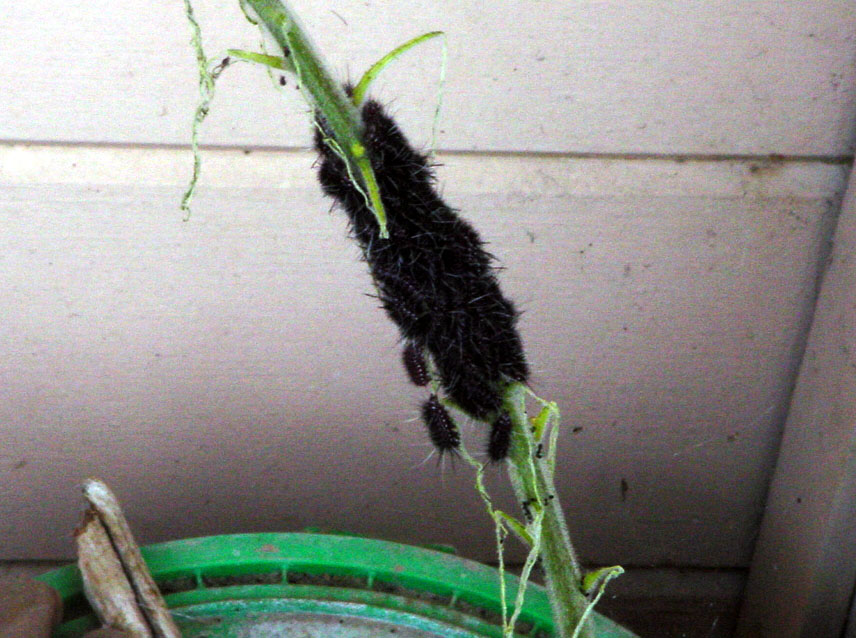
 For the record, this particular moth is called the painted tiger moth or, officially, arachnis picta. Why arachnis, which sounds pretty spidery to me, I don't know. Googling, I found physical specs for the critter and plenty of pictures, but nothing about how it makes a living. However, one insect collector in American Fork Canyon, Utah, had posted a splendid series of 12 life-cycle pictures. Starting with a female who laid 400 eggs in the first week of September, subsequent pix followed the caterpillar and pupa stages on to emergence of a new generation of arachnis. Great stuff!
Links for the End of August: The site where I found those pix was most interesting: Insect Net, a network for insect collectors (which means primarily butterflies and beetles, of course.) Forums, photo galleries & videos, news, shopping -- all in one place. While in the realm of nature, a picture from NASA of a curious cloud formation down under in Queensland -- they are called morning glory clouds, though they look more like rolled up crepes. Closer to home, I found a set of Flickr photos of our Citizens Cemetery.




 Posts
Posts


